portraits of the multiverse
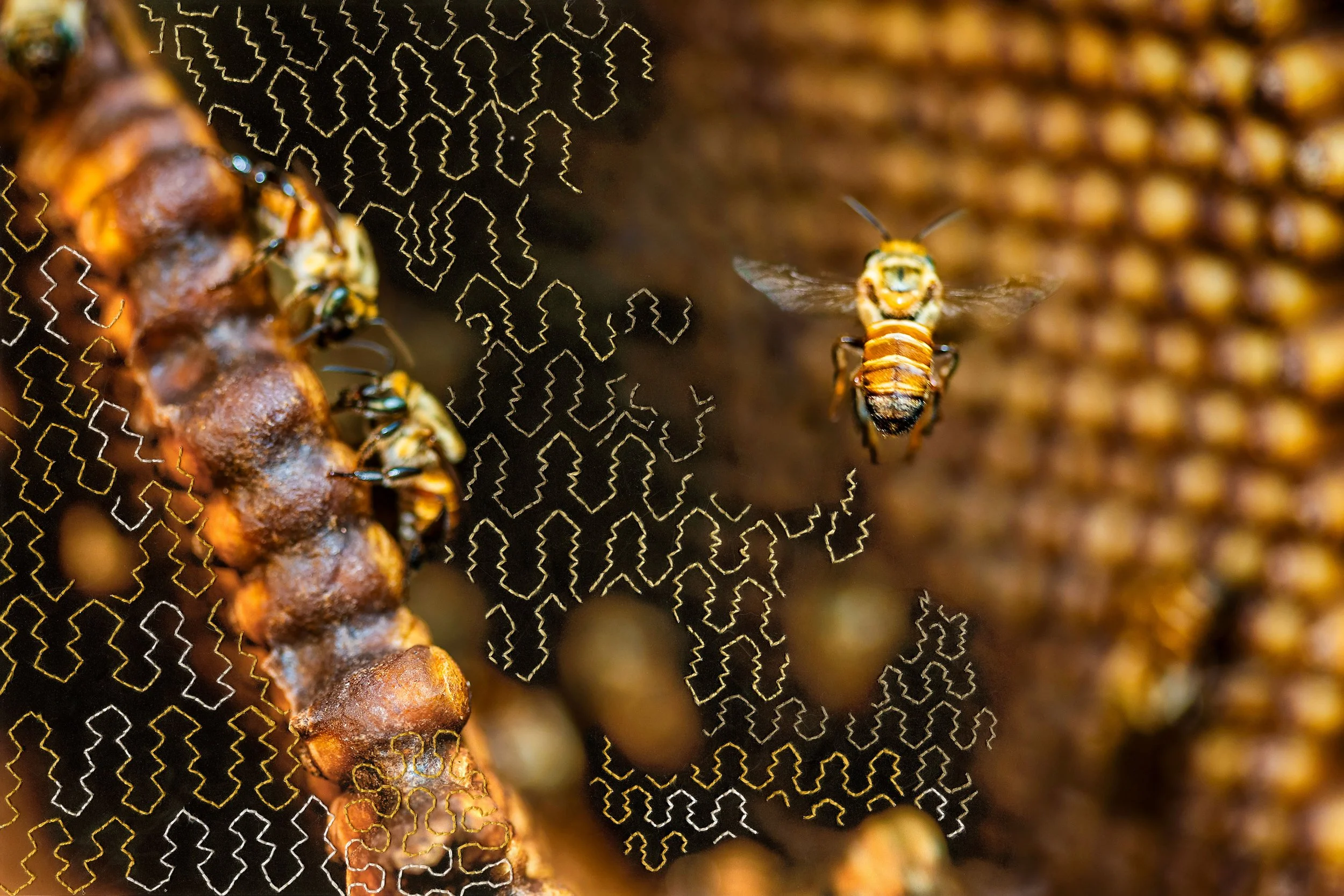
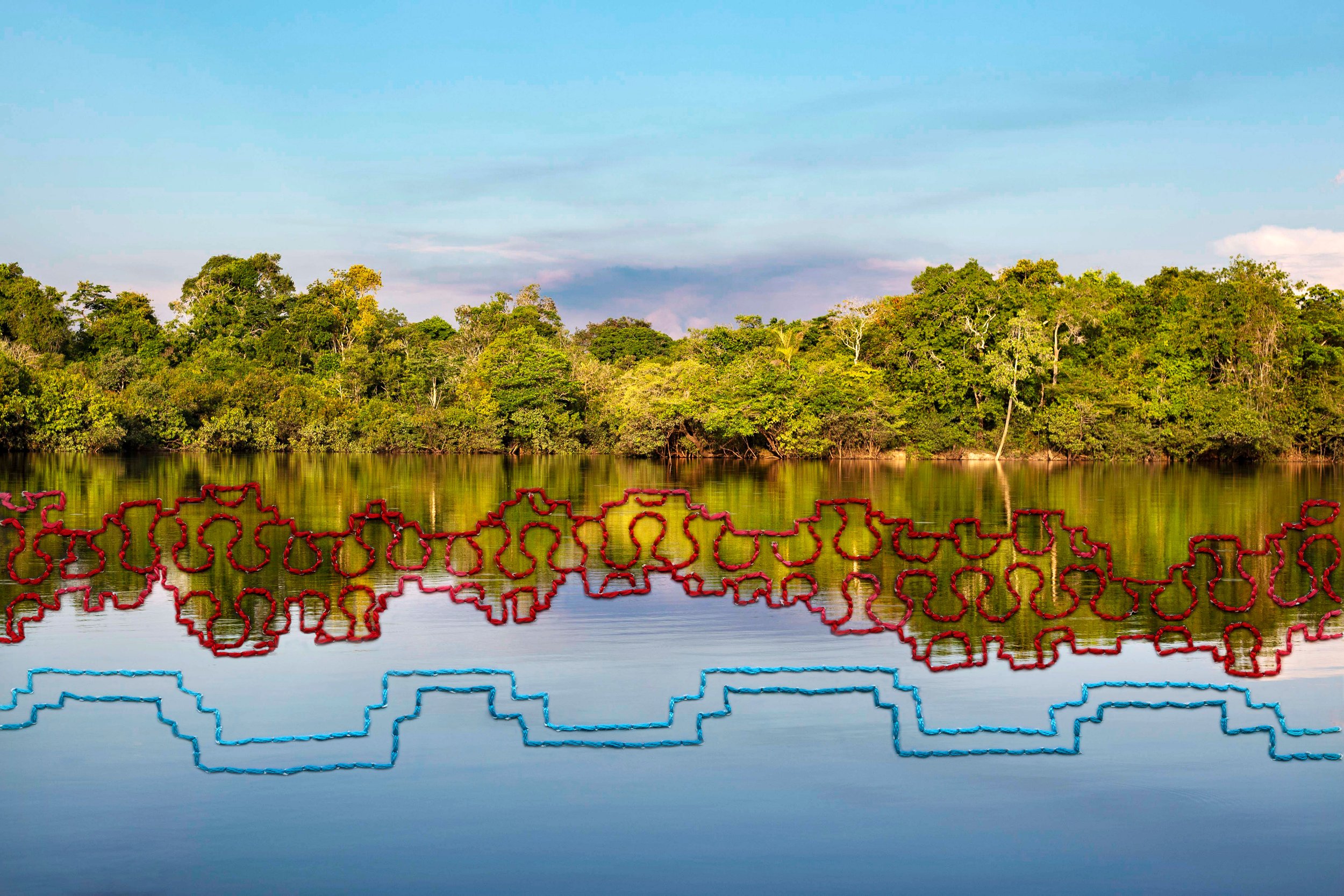
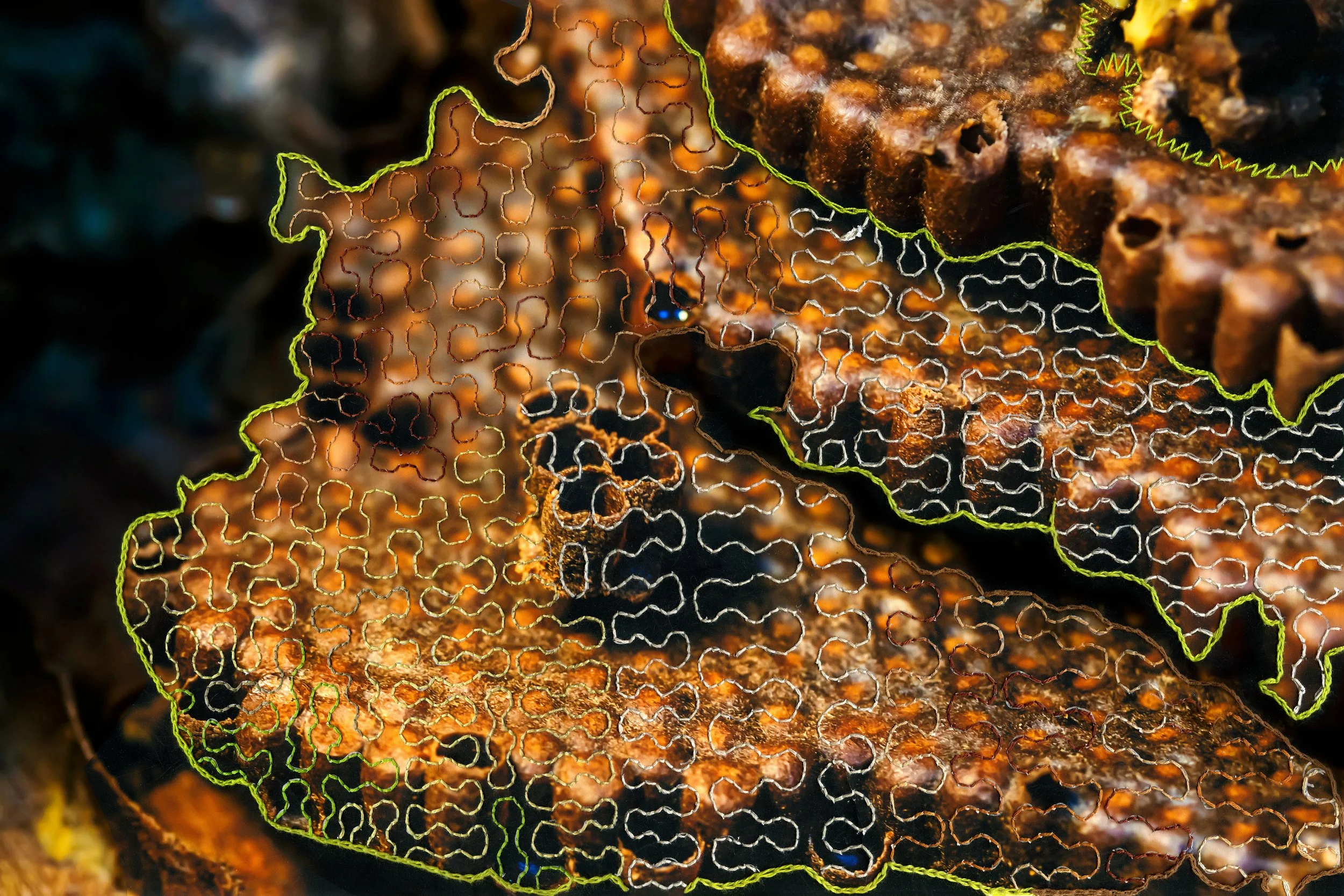
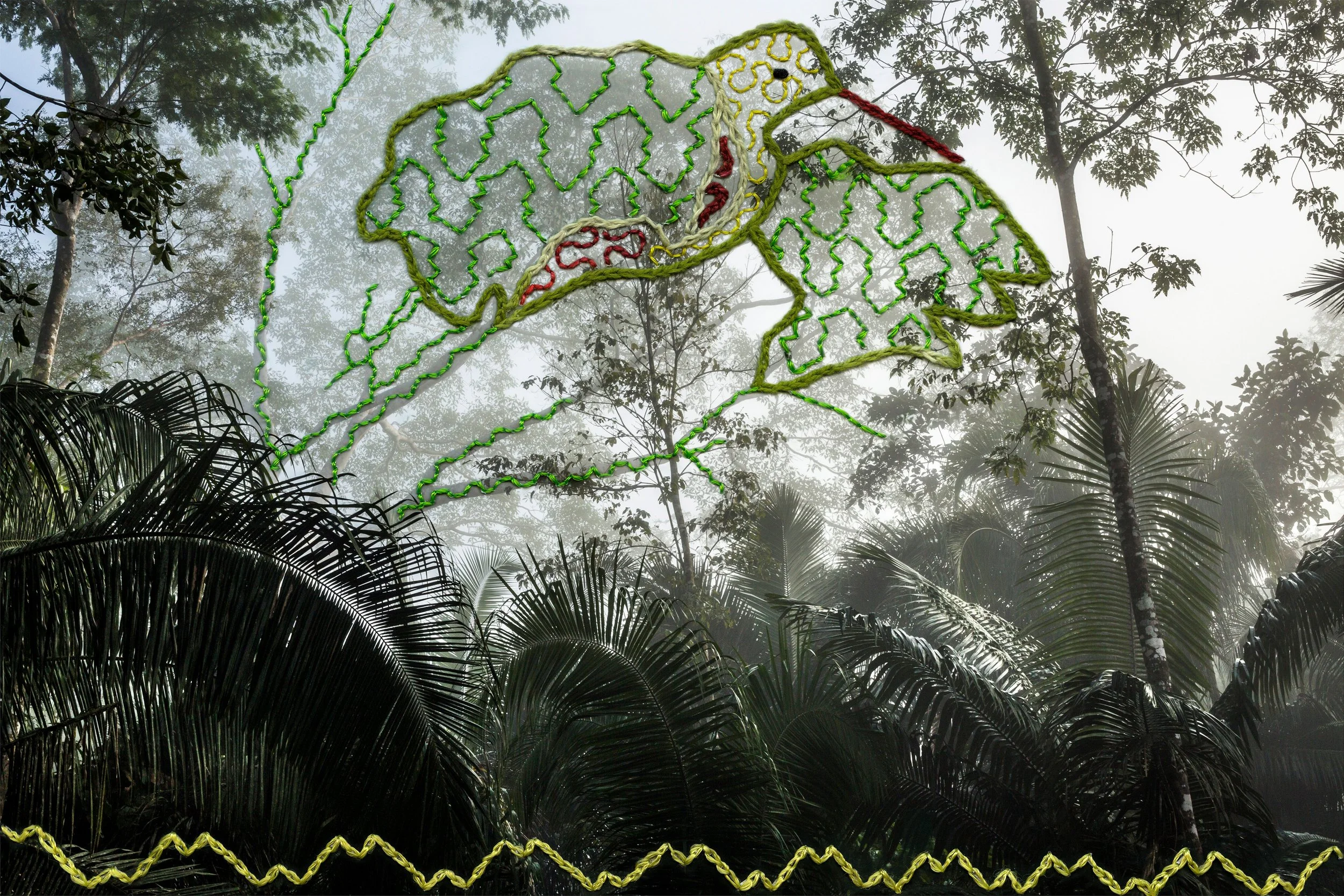
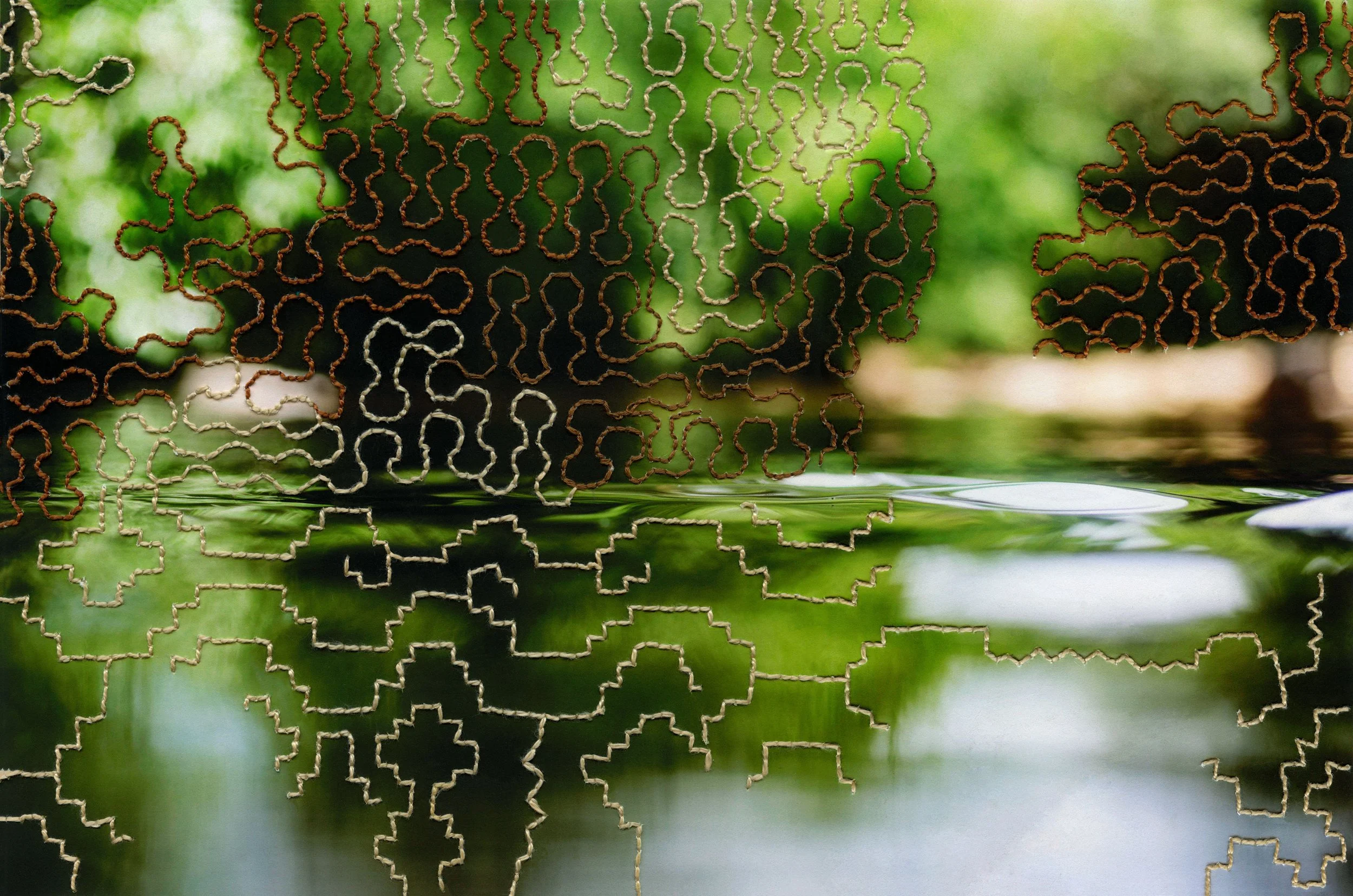
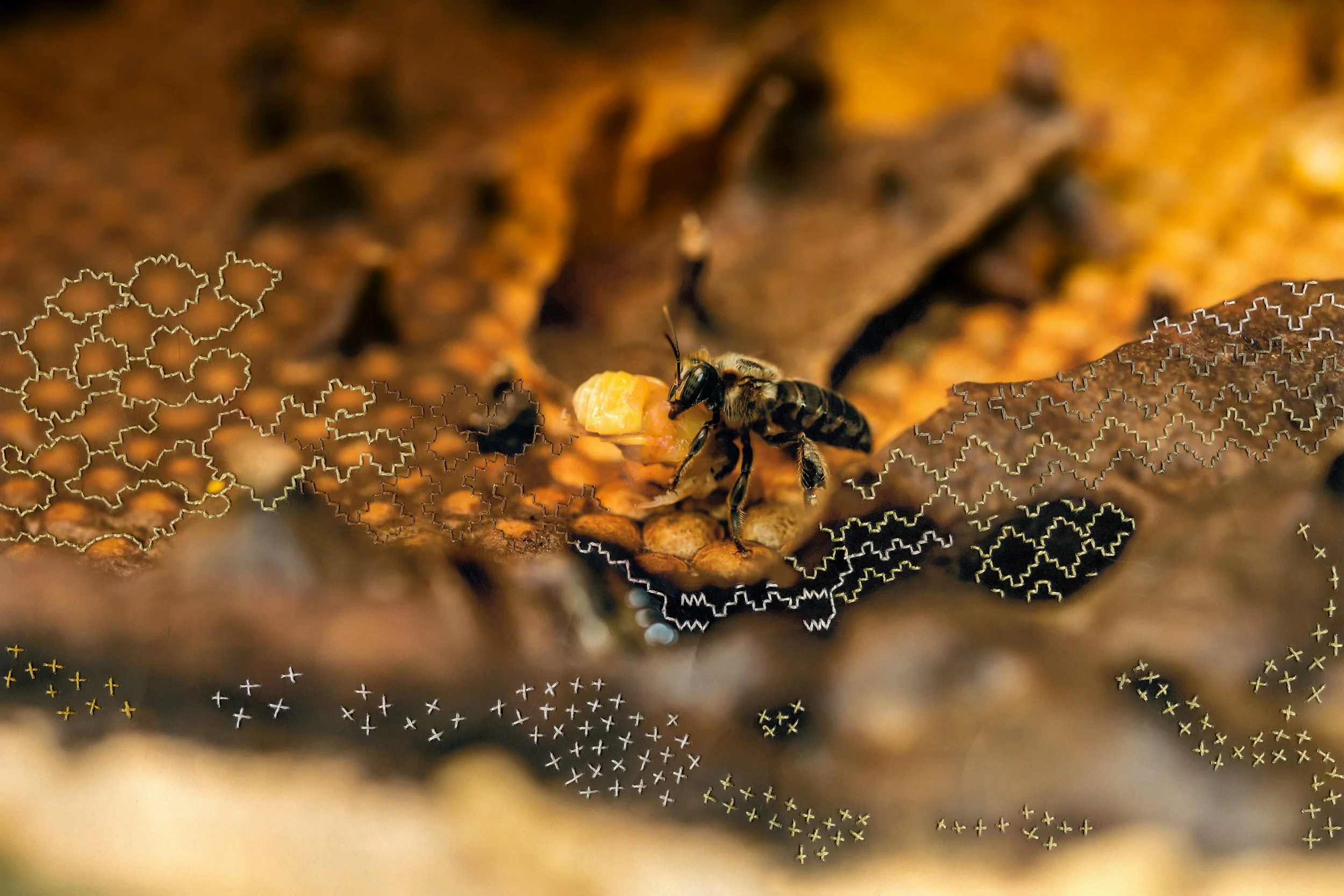
Portraits of the Multiverse is a visual investigation between Shipibo artist Sadith Silvano and myself. Started in 2022, the project generates a visual dialogue about the Amazonian multiverse through an encounter between two languages that capture light through different means: photography and kené embroidery.
The images, made along the banks of the Shanay-Timpishka and Nanay Rivers, represent nearly a decade of my exploration of healing in the Amazon rainforest. In these regions, primary forest is being cleared to make way for farmland, resulting not only in the loss of flora and fauna but also in a profound cultural shift, altering the relationship between the people of the forest and the land. In a landscape where territory and culture are inextricably linked, the disappearance of the forest can also mean the disappearance of the spirits and soul of the jungle.
The Shipibo people of the Amazon have represented this spiritual world for thousands of years through the kené art form. Shipibo women are trained from a young age to “see” and understand kené, accessing this world through song and the intake of sacred plants that reveal visions of this energy.
In an attempt to make this invisible realm visible, I turned to Sadith, who responds to my photographs by embroidering kené onto their surfaces. Through her intervention, the photographs become a meeting point between the visible and invisible, allowing us to explore the coexisting material and immaterial realms of the Amazonian multiverse
This series was awarded the 2024 Thinking Sustainability Prize from the Louis Roederer Foundation. You can read more here .
This series was also featured on Where the Leaves Fall Magazine. Read more here.


Pictures also sing: photo-embroidery in the multiverse
Luisa Elvira Belaunde Olschewski
Original version
Photographs also sing. Their voice is an embroidered thread on their bodies made of paper. Such words come to mind when I see the artistic work of Ana Elisa Sotelo and Sadith Silvano. The photo-embroidery series Portraits of the Multiverse is born from the confluence of two different graphic epistemes that met at the Boiling River in the Peruvian Amazon, in the Ucayali basin, land of the Shipibo-Konibo people. Ana Elisa went there searching for healing with ancestral Amazonian medicines made from the bark of the Came Renaco trees growing on its banks. When she was undergoing her plant therapy, she made pictures of the river sanctuary and its steam. Back in Lima, she took her photos to Sadith in Cantagallo, the urban Shipibo-Konibo community in the polluted and hectic heart of the Capital.
“Tell me what you see in these photos I took of my relationship with the river and its plants,” she requested and explained she had drunk Came Renaco and Ayahuasca during her healing journey. “I felt many things, but don’t know what happened. I could only take pictures of what I was seeing, as a visitor.” Sadith looked at the photos with the eyes of someone who was raised in a family of visionaries. Since she was a child, she grew up surrounded by Kené and learned to find it, even if it were not visible, guided by the visionary skills she inherited from her elders. When Ana Elisa suggested she should intervene with her ancestral art in her photos, Sadith patiently hollowed out the embroidery path, opening pores on the paper before passing the thread through.
Kené is a visual language of geometric patterns composed of strokes of varying thickness and color generating games of light and contrasts between background and figure. Its purpose is not so much to explicitly reproduce the figures of the beings around, as to reproduce what makes these beings capable of action. Kené catches the eye, forcing it to complete the figures that insinuate themselves between the lines without ever remaining fixed.
Unlike photography, it does not capture the light of surrounding beings to reveal their images, but rather reveals and cleans up their usually invisible energy circuits, illuminating them through traces of color. This bright full energy, or as expressed in Shipibo-Konibo, Koshi, is a key feature of powerful cosmic beings with shiny skins, providing them with a hypnotic and fierce beauty. Such is the case of the spots on anacondas and big cats, both animals standing at the top of the forest predation chain, or the star-pierced path of the firmament and the veins of plant leaves that grant health, thought and skills.
The work of crisscrossing photography and embroidery was done in polyphony, sometimes with convergent melodies, other times in independent routes. “Water is a very strong healing space to me,” claimed Ana Elisa, who swims regularly and water is a constant motif in her work. In the pictures Ana Elisa took, Sadith saw, dancing on the river steam, the designs of Ronin, the cosmic “mother” of water and Ayahuasca. According to Ana Elisa, when she drank Ayahuasca as part of her therapy, the very plant “called out for other plants” to come and gather in her healing. Sadith had also drunk Ayahuasca. “In my case, I got to talk with Mother Ayahuasca who is La Abuelita (The Endearing Grand Mother). She told me there are many kinds of Kené designs, the ancestral and the contemporary. Each woman works in her own way following her inspiration”. That’s why Sadith embroidered on the picture of an Ayahuasca leaf with red, yellow and green threads, some more recent curved designs as well some older designs with right angles, placing their lines “face to face”. Such a “duality”, she explained, “represents us, humans”.
In each new picture, each artist told her own life story. While Ana Elisa saw that she had taken a photo of her extended hand requesting help from the river and plants, Sadith saw that her own hand was portrayed as a vehicle of knowledge from her mother and sister. “Our hand is magical; you receive, you also give. Thanks to my hand´s energy I am now the woman I am. I can do what I set my mind to, thanks to my Kené.”
The flow of Kené Sadith embroidered on the picture moves onto Ana Elisa´s hand. The designs enter the photograph through its frame with a thick line tinted with blue, which moves in steps with broken angles and is superimposed on a thinner golden line, which moves in curves. Both threads arrange themselves on the palm of the hand forming a head-shaped pattern. Then, the golden embroidery frays over the wrist. It gives the impression of floating above its veins or, depending on how you look at it, of surging from its blood as a spring of Kené dancing up into the sky.
Such a game of perspectives is what Sadith calls “face to face”: It applies everywhere, curved and broken, thick and the thin, what receives and what gives, what comes and what goes. Everything has its pair. “Duality” everywhere engenders the perceptive dynamism of Shipibo-Konibo art. The ghostly aesthetic of the river captured by the camera lens contrasts with the neat strokes of the Kené the camera did not see, calling into question what is real. Portraying the multiverse may mean trying to encompass all the versions of worlds that make it up, but this is never possible. Each version has its other side, which is never just its reverse image; and when one side is seen more clearly, the other one shallows, and transforms, in an incessant play between background and figure. Kené invites the viewer to flow along with multiplicity knowing that the visible and the invisible coexist in motion and may never be encapsulated in a fixed thoroughly comprising image.
In the last picture of the series, the embroidered cloak embellishing the bather/mermaid’s tail “represents me,” both artists said. Ana Elisa made a picture of herself swimming in her favorite “healing space” and Sadith saw in it her own image, “my own empowerment, my livelihood”. Like a mermaid´s cloak, she explains, “Kené is my faithful companion. It never leaves me.” She now lives and works in Lima, but even in the midst of urban frenzies, her Kené unlocks the healing energies hidden in Ana Elisa´s picture. Their photo-embroidery casts spells. It wraps us with the Amazon´s breathing waves. I wish I were a mermaid too. Maybe that’s why such a seemingly dissonant phrase comes to mind: photographs also sing. Their bodies breathe in and out with the needle of Kené. This photo-embroidery series is a masterfully achieved work of creativity and thought, each artist experimenting with their techniques in pas de deux, “face to face”.
About the Author
Luisa Elvira Belaunde Olschewski is an anthropologist and specialist in indigenous peoples of the Amazon. Within the area of indigenous ethnology, she has specialized in female perspectives, both in terms of their own cultural aspects and processes of change, interconnection with national society and interculturality. In the last decades, the proximity to Amazonian thought and creativity has led her to become interested in indigenous arts, especially in the Kené Shipibo-Konibo, on which she wrote a public policy document that culminated in the patrimonialization of indigenous graphics.